

How Can Towing SEO Turn Local Service Areas Into Search Assets?
Sep 28, 2026


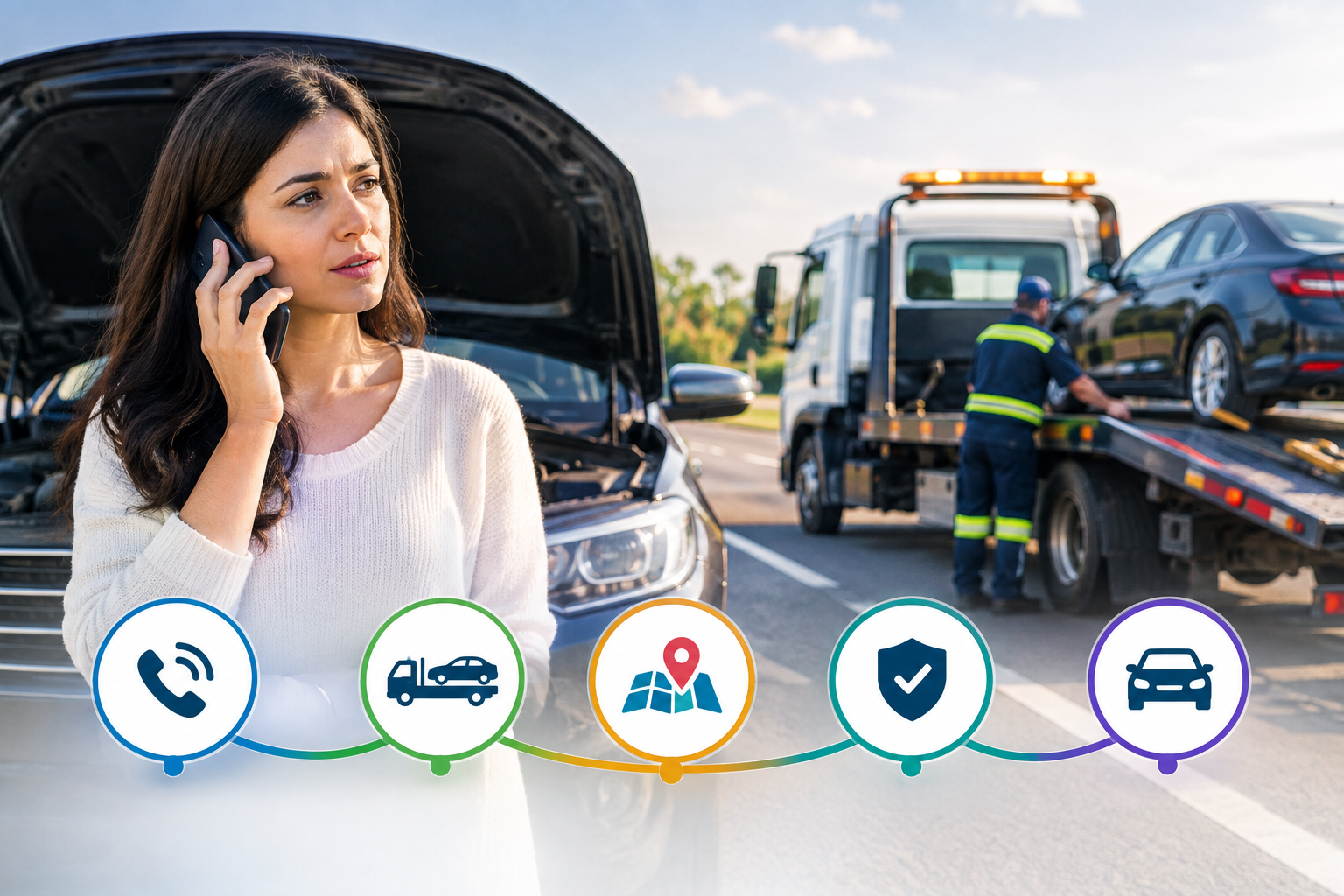
When drivers need towing help, they rarely stop at the first question. After searching for a towing service, they often want to know what happens next. They may ask how quickly a tow truck arrives, what information they need to provide, where their vehicle will be taken, or what they should do while waiting. These “what happens next?” searches reveal strong intent and give your towing website an opportunity to provide immediate, useful answers.
“What happens next?” searches are follow-up queries that appear after a person identifies a problem or service need. For example, a driver might search:
These searches are highly practical. The user is not simply researching towing as a general topic. They are trying to understand the next step in a real situation.
By answering these questions clearly, you can make your website more useful while strengthening its relevance for conversational and AI-driven search.
Towing decisions often happen under pressure. A stranded driver may feel uncertain, especially if they have never used a towing service before. Your content can reduce that uncertainty by explaining the process in a simple sequence.
Instead of focusing only on phrases such as “24-hour towing” or “tow truck near me,” build content around the complete customer journey.
For example, explain what happens from the initial phone call through vehicle pickup, transportation, payment, and follow-up. This creates useful contextual coverage around your towing services.
A strong Towing SEO Company can help you structure this information around real customer questions, search intent, local relevance, and semantic relationships.
Start by identifying the stages a customer experiences before, during, and after receiving towing assistance.
Your content can address:
Before calling: Explain what information the driver should collect, such as location, vehicle type, problem, and destination.
During the call: Describe what the dispatcher may ask and how the customer can communicate their exact location.
While waiting: Explain how the driver can stay safe and what they should avoid doing.
When the tow truck arrives: Clarify what the towing professional may inspect or confirm.
During transportation: Explain where the vehicle can be taken and what customers should confirm beforehand.
After towing: Address payment, vehicle retrieval, documentation, and recommended follow-up steps.
This approach gives search engines more complete information while helping customers understand what to expect.
Do not force every question into one generic service page. Create focused content for specific situations.
For example, you could publish articles such as:
Each page can answer a specific question while naturally connecting to relevant towing services.
This strategy also creates opportunities for internal linking between informational articles and commercial service pages.
AI search systems need clear relationships between questions, answers, services, locations, and entities. A page that simply repeats keywords may not provide enough useful context.
Use direct headings and concise explanations. Answer the question immediately, then provide supporting details.
For example, if your heading asks, “What happens after you call a towing company?” begin with a straightforward explanation before expanding into preparation, arrival time expectations, safety considerations, and vehicle transportation.
Use natural terminology related to towing, roadside assistance, vehicle recovery, dispatching, breakdowns, vehicle transport, repair facilities, and customer safety. This strengthens semantic depth without keyword stuffing.
“What happens next?” searches can also have strong local intent. A driver may want to know what happens after requesting towing in a particular city, neighborhood, highway area, or service zone.
Create location-relevant content when you genuinely serve those areas. Mention the services available, common roadside situations, and practical local considerations without producing repetitive city pages.
Your goal should be to demonstrate that your towing business understands both the service and the customer’s situation.
Helpful content should not end without giving readers a logical next step.
After explaining the towing process, direct visitors toward an appropriate service page, phone contact, emergency assistance option, or consultation. Keep the CTA relevant to the user’s situation instead of using aggressive sales language.
When your content consistently answers questions before asking for a conversion, visitors are more likely to view your business as helpful and trustworthy.
If you want to build a stronger search-focused content strategy, you can Contact us today to discuss how your towing website can improve its organic visibility and customer-focused content structure.
Optimizing for “what happens next?” searches helps you move beyond basic keyword targeting. You begin creating content around real customer journeys, conversational questions, service relationships, and decision-making stages.
That broader topical coverage can support traditional search visibility while making your content more useful for AI-generated answers.
The strongest towing websites do not only explain what they offer. They explain what customers can expect before, during, and after using the service.
What are “what happens next?” searches?
They are follow-up questions users ask after identifying a towing problem or requesting a service. They focus on understanding the next step in the customer journey.
Why should towing websites target these searches?
They address practical customer concerns and provide opportunities to demonstrate expertise, improve topical relevance, and support users at different stages of search intent.
What questions should a towing website answer?
Cover questions about calling a tow truck, waiting for arrival, vehicle pickup, towing destinations, payment, vehicle retrieval, and what customers should do after towing.
Can these searches help with AI search visibility?
Yes. Clear question-and-answer content gives AI search systems structured, context-rich information that can be easier to interpret when generating responses.
Should “what happens next?” content include local information?
Yes, when the information is genuinely relevant. Local service areas, towing situations, and customer needs can make the content more useful for location-based searches.
How can a towing website turn informational content into leads?
Provide a helpful answer first, then offer a relevant service link or CTA that gives readers an easy next step without interrupting the informational experience.