

How Can Towing SEO Turn Local Service Areas Into Search Assets?
Sep 28, 2026


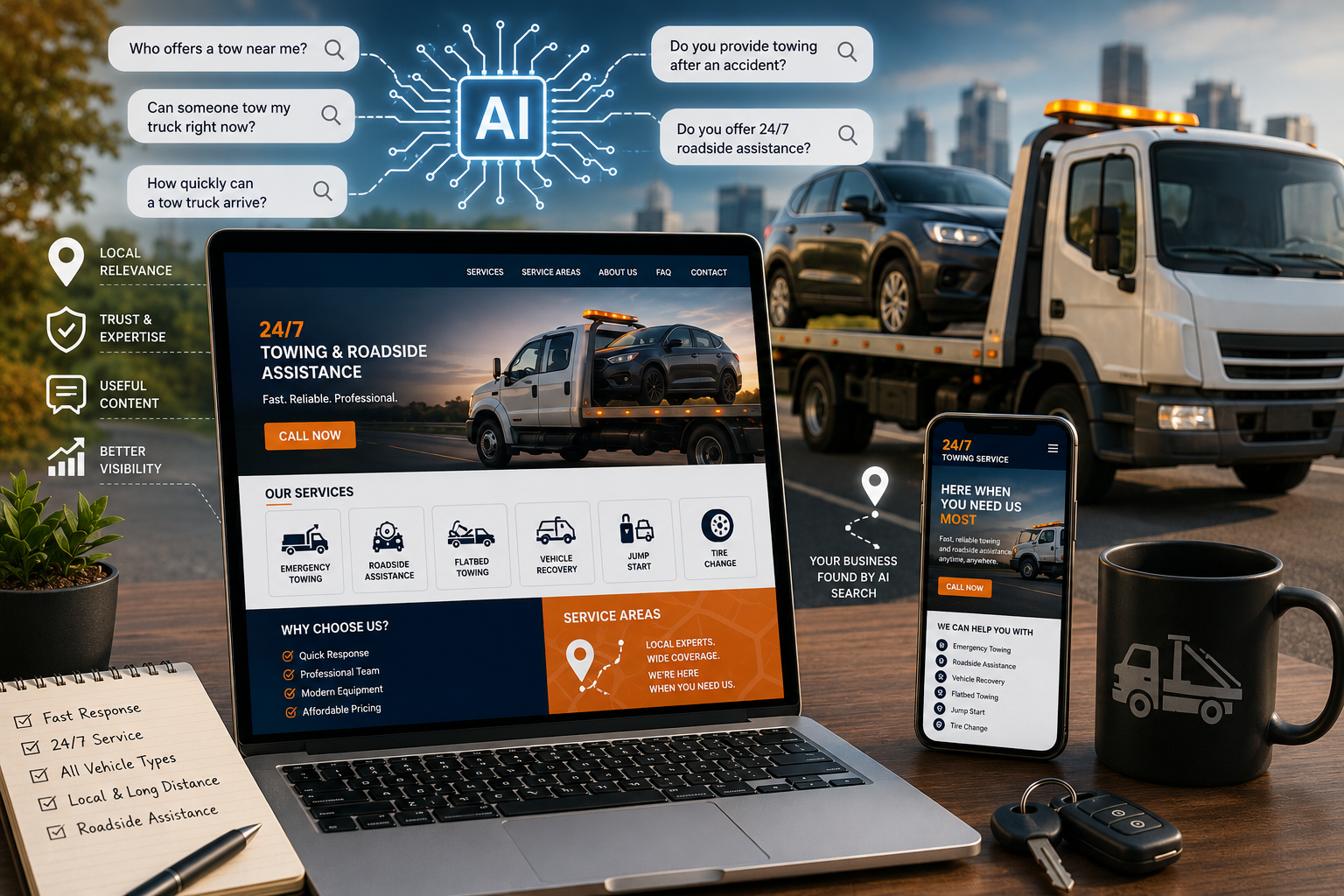
When someone’s vehicle breaks down, they rarely have time to browse through dozens of websites. They ask direct questions such as “Who offers a tow near me?” or “Can someone tow my truck right now?” Search engines and AI platforms increasingly need to understand the meaning behind these questions and identify businesses that provide useful, trustworthy answers. For towing companies, that means your website needs to communicate more than keywords. It needs to clearly explain your services, service areas, expertise, availability, and value.
AI search engines rely on well-organized information to understand what a website is about. Your towing website should have a simple structure that connects related services and locations logically.
Create dedicated pages for important services such as:
Avoid placing every service on one generic page. Separate pages make it easier for search systems to understand the specific solutions you provide.
Your navigation should also be straightforward. Visitors should quickly find your services, service areas, contact information, pricing guidance, and emergency assistance options.
Traditional SEO often focuses heavily on phrases such as “towing service in [city].” Those terms still matter, but AI search is increasingly conversational.
Think about what customers actually ask:
Build sections of your website around these questions and answer them directly. This creates useful content that can serve both traditional searchers and people using conversational AI tools.
Simply creating dozens of city pages with nearly identical text can make your website appear repetitive and unhelpful.
Instead, make each location page genuinely useful. Explain the services available in that area, the types of vehicles you handle, common roadside situations, major roads or nearby areas served, and what customers should expect when requesting assistance.
For example, instead of repeating “We provide towing in Dallas” throughout a page, explain how your team handles emergency breakdowns, accident recovery, or roadside assistance in the local area.
This gives search engines stronger context about your actual geographic relevance.
Internal linking helps search engines understand relationships between your pages.
Your emergency towing page could link to roadside assistance, accident recovery, and relevant location pages. A flatbed towing page could connect to vehicle recovery and long-distance towing content.
Use descriptive anchor text instead of vague phrases like “click here.” For example, linking naturally to a Towing SEO Company can provide meaningful context when discussing specialized SEO strategies for towing businesses.
The goal is not to add links everywhere. Each link should help users discover information that logically supports the page they are reading.
Consistency matters when you want search systems to understand your business accurately.
Keep your business name, phone number, address, service areas, hours, and services consistent across your website and reputable business profiles. Include clear contact details rather than hiding important information inside images.
Your website should also clearly communicate whether you provide 24/7 towing, emergency assistance, commercial towing, heavy-duty towing, or other specialized services. Only claim services you actually provide.
Structured data can also help search engines interpret information such as your organization, business details, services, and frequently asked questions. It should accurately reflect visible information on your website.
AI search systems need useful information to determine which sources deserve attention. Your content should demonstrate practical knowledge instead of simply repeating generic SEO language.
Publish helpful guides based on real customer situations. Explain what drivers should do after an accident, how to prepare a vehicle for towing, when flatbed towing may be appropriate, and what information customers should provide when requesting roadside help.
Include original insights, clear explanations, and accurate details. Content written from genuine industry experience is more useful than pages created solely to target search phrases.
Great content cannot compensate for a difficult website experience.
Make sure your towing website:
A mobile-friendly design is especially important because towing searches often happen during urgent situations.
Your website should answer questions before, during, and after a towing request.
Someone discovering your company may need information about services and coverage. A customer ready to call may want to know what information to provide. Someone comparing options may want reassurance about experience, equipment, response expectations, and service quality.
Cover these needs throughout your website instead of creating pages that target only one keyword.
If you need a focused strategy for improving your towing website’s visibility across traditional and AI-powered search, Contact us today to discuss your goals.
What makes a towing website easy for AI search engines to understand?
A clear structure, descriptive service pages, useful location information, consistent business details, internal links, FAQs, and genuinely helpful content make it easier for AI systems to understand your business.
Should a towing company create a page for every service?
You should create dedicated pages for important services when each page provides unique, useful information. Avoid producing nearly identical pages that only change the city or keyword.
Are location keywords still important for towing SEO?
Yes. Location relevance remains important for local towing searches. However, location keywords should be supported by useful local information, service details, customer-focused answers, and trustworthy business signals.
How can FAQs help a towing website?
FAQs allow you to answer specific customer questions in natural language. They can strengthen topical relevance and make important information easier for both users and search systems to interpret.
Why should towing businesses invest in specialized SEO?
Towing searches are highly local and often urgent. A specialized Towing SEO Company can build a strategy around local search intent, service visibility, conversion opportunities, and emerging AI search behavior.
Building a towing website that AI search engines can understand is not about stuffing pages with keywords. It is about creating a clear digital representation of your business. Explain what you do, where you operate, which problems you solve, and why customers can trust you. When your content, structure, technical setup, and business information all reinforce the same message, your website becomes easier for both search engines and customers to understand.